The UK medical school application assumes you grew up inside it.
The UCAT. The UCAS form. The personal statement conventions. The university shortlisting logic. The NHS references woven through every interview. None of it is explained. All of it is assumed.
Only 2% of international applicants receive an offer for medicine or dentistry. That number tells you how much harder it is to navigate a system designed for people who have been inside it since secondary school.
Future Doc has helped students from over 30 countries navigate this process. Around a quarter of our applicants are international. We know where the system trips you up, and we know how to prevent it.
What UK applicants take for granted, you have to build from scratch.
A student who grew up in the UK system knows, without thinking about it, what medical schools want to see in a personal statement. They know which experiences carry weight. They have an instinctive feel for NHS values and how to demonstrate commitment to a UK clinical environment.
International applicants have to learn all of this consciously, while simultaneously preparing for the UCAT, building their application, and navigating eligibility requirements that vary from university to university. The five problems every applicant faces hit harder when you are doing it from outside the system.
Time
For international applicants, the process often spans two years. Timeline misunderstandings are common: when to sit the UCAT, when UCAS opens, when universities fill their international places. Coordinating preparation across time zones adds another layer. The Application Diagnostic™ builds a realistic timeline calibrated to your specific situation and route.
Making Mistakes
Wasting one of your four UCAS choices on a university that does not accept your qualifications, or that has already filled its international places, or whose interview format does not suit your profile. With a 2% success rate, you cannot afford a single wasted choice. The University Selection Clinic™ maps exactly where you are eligible and competitive.
Overwhelmed
Navigating an unfamiliar system with no one to ask. IELTS requirements, qualification recognition, accommodation logistics, work experience conventions that are largely foreign to your educational culture. The Specialist Track™, the lens through which the entire Predictable Offer Protocol is delivered for international applicants, ensures every element accounts for what you do not yet know about the UK system.
All Eyes on You
“What if I waste my family’s money?” The financial and opportunity cost for international applicants is enormous. International tuition fees, travel, living costs, lost time. The guarantee frames the risk: complete the programme, follow the roadmap. No offer, continue into the following application cycle for free.
Don’t Know What Good Looks Like
“Am I doing this right? I have nobody to ask.” No instinctive feel for NHS values, personal statement conventions, or interview expectations. No reference point for what a strong UK application looks like versus a weak one. Your Dedicated Coach™ is selected because they understand the international pathway. They have guided students through it before. They know what trips international applicants up and where the system quietly penalises unfamiliarity.
One coach. One system. Everything connected.
Most applicants treat the application as a series of separate hurdles: the UCAT, personal statement, work experience, university selection, and interviews. They try to solve each one independently. This creates a fragmented approach where the pieces never add up to more than the sum of their parts, and families are left feeling overwhelmed, uncertain, and unsure whether they’re even on the right track.
Future Doc works differently. A dedicated coach who knows your complete profile coordinates every element of your application as one interconnected system. Every decision is made with the full picture in mind.
The result: 93% of our students receive at least one offer. If they don’t, they continue into the following application cycle for free.

You’re not at a disadvantage because of your ability. You’re at a disadvantage because of the system.
The questions international applicants ask most often are the ones that reveal exactly why the system is so difficult to navigate alone.
“Can you really help from overseas?”
Around 25% of Future Doc students are international, from over 30 countries. The programme is delivered remotely, with coaching across time zones. This is not an afterthought. It is how a significant portion of our students have always worked with us. The Predictable Offer Protocol was designed to work regardless of where you are based.
“I don’t understand the UK system at all.”
That is precisely the point. The Specialist Track ensures every element accounts for what you do not yet know about the UK system. Your coach has guided students through this pathway before. They know where international applicants get tripped up, what assumptions the system makes that you would not know to question, and how to build the knowledge you need without wasting time on things that do not matter for your route.
“Is the investment worth it given the odds?”
The national success rate for international applicants is 2 to 3%. The cost of applying blind is another year, another set of fees, another cycle of uncertainty. The guarantee means if you complete the programme, follow the roadmap, and do not get an offer, you continue into the following application cycle for free. We do not just want you on the programme. We want you to get in. We back our students all the way, because that's what we're here to do.
A system built for a system you weren’t trained in.
The Predictable Offer Protocol is the same interconnected system for every student. But how it is delivered for international applicants reflects the specific challenges of navigating the UK process from outside it.
Specialist Track
The Specialist Track is the lens through which the entire Predictable Offer Protocol is delivered for international applicants. It is not a bolt-on or a separate element. Your coach is selected because they understand the international pathway. Route-specific theory videos are available from day one. Obstacles are anticipated before you encounter them. That's the Specialist Track →
University Selection Clinic
Not all UK medical schools accept international students. Those that do have different fee structures, UCAT requirements, and expectations. With a 2% success rate, you cannot afford to waste a single choice. Future Doc’s Selection Database maps eligibility precisely: which universities accept your qualifications, where you would be competitive, and where your four UCAS choices are best spent. That's the University Selection Clinic →
UCATalyst Method
The UCAT is unfamiliar to most international applicants. The test design, timing pressures, and question formats are not encountered in most non-UK educational systems. The UCATalyst Method starts from your baseline with a diagnostic mock and builds through six progressive steps, calibrated to your timeline and target universities. That's the UCATalyst Method →
Impact Statement
What impresses UK admissions panels reflects specific cultural and clinical values. Your personal statement must communicate experience in the language UK panels expect, not adapted from a different system. The Impact Statement module ensures your writing reflects NHS values and UK conventions from the first draft. That's the Impact Statement →
Think Like a Doctor
UK medical school interviews require preparation that reflects UK clinical and ethical culture specifically. The MMI format is particularly unfamiliar to most international applicants. Think Like a Doctor provides university-specific practice, drawing on the ethical reasoning built through Finger on the Pulse and the clinical reflection developed through the Experience Lens. That's Think Like a Doctor →
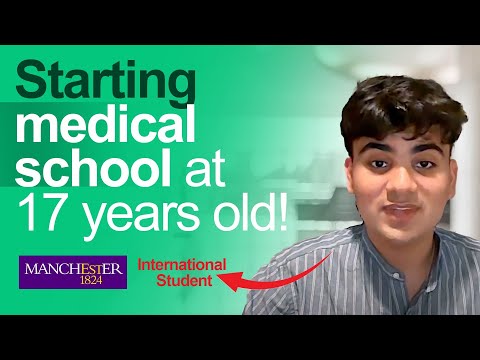
“Getting into medical school felt like a distant dream. Future Doc completely revolutionised my ability to write a good personal statement and give a good interview. I’m now privileged to have a place at the University of Manchester.”Ranjit, International Applicant

The Future Doc Guarantee
The Offer Guarantee
If you complete the programme, attend your sessions, and follow the roadmap your coach sets out for you, and you still don't receive an offer from any medical or dental school, we continue working with you into the following application cycle at no extra cost. We re-strategise and pick up right where you left off.
30-Day Money-Back Guarantee
Try the programme with complete confidence. If for any reason you're not happy within the first 30 days, we'll give you a full refund. No questions asked.
— Dr Ash
93% of Future Doc students receive at least one offer to medical or dental school.
Frequently asked questions
How many UK medical schools accept international students?
A limited number, and each has different requirements for qualifications, fees, and UCAT thresholds. Some universities have very few international places, and competition for those places is intense. The difference between a well-chosen shortlist and a poorly chosen one can be the difference between an offer and a rejection.
The University Selection Clinic maps exactly which universities accept your qualifications, where you would be competitive, and where your four UCAS choices are best spent. This is not something you can afford to guess.
Do I need to sit the UCAT?
Most UK medical schools require it. Some accept the GAMSAT for graduate applicants. The answer depends on your route, your qualifications, and which universities are open to you.
The Application Diagnostic, the assessment and planning stage of the Predictable Offer Protocol, determines what is right for your situation. Your coach builds your preparation plan from there.
What about qualification recognition?
Different education systems are assessed differently by UK universities. Some qualifications need specific verification or conversion. Some are accepted directly, others require additional steps.
Your coach and the Specialist Track account for qualification conversion, A-level equivalencies, and any additional requirements from day one. This is built into your plan from the start, not discovered halfway through the process.
Can I prepare from outside the UK?
Yes. The programme is delivered remotely. Around 25% of Future Doc students are international, from over 30 countries. Coaching sessions work across time zones. The online modules, group seminars, and resources are all accessible from anywhere.
This is not an afterthought. It is how a significant portion of our students have always worked with us. The Predictable Offer Protocol was designed to work regardless of where you are based.
Is it really worth it with a 2% success rate?
That 2% is the national average for international applicants navigating the system alone. Future Doc’s approach coordinates everything as one interconnected system, calibrated to the international route. 93% of our students receive at least one offer.
The cost of applying blind is another year, another set of fees, another cycle of uncertainty. And the guarantee means if you follow the programme and do not get in, you continue into the following application cycle for free. The question is not whether you can afford to invest in this. It is whether you can afford not to, given what is at stake.
What happens if I don’t get an offer?
The guarantee: complete the programme, follow the roadmap your coach sets out for you. If you do not receive an offer, we continue working with you into the following application cycle for free. No small print.
We do not just want you on the programme. We want you to get in. We back our students all the way, because that's what we're here to do. Outcomes do not always reflect ability. Some of the best doctors struggled to get in. What matters is that you do not give up, and that you have the right support behind you when you go again.
How does the programme work across different time zones?
One-to-one coaching sessions are arranged at your convenience, regardless of time zone. Group sessions, seminars, and workshops are all recorded, so you can watch them at a time that works for you.
Around 25% of our students are international, from over 30 countries. The programme is designed to work remotely from day one. This is not an afterthought or a workaround. It is how a significant portion of our students have always worked with us.
Your four choices are too valuable to guess.
93% of Future Doc students receive at least one offer. 2% of international applicants get in nationally.
Apply to the ProgrammeWe purposefully limit capacity to ensure quality