Getting rejected is one thing. Not knowing why is another.
You put everything into that application. And all you got back was a no. No feedback. No explanation. No clear sense of what to change. You are not alone. Approximately 20% of medical school applicants in any given year are re-applicants, and most of them face exactly the same problem.
Most people make a few adjustments and reapply, hoping the outcome will be different. For the majority, it isn't. The real problem hasn't been identified. You can spend months improving your UCAT score, rewriting your personal statement and adding more work experience, and still not fix the thing that actually cost you last time.

The danger of reapplying without a diagnosis
Time
Another year not in medicine or dentistry. Another year watching peers progress. Another year of explaining why you haven't got in yet. The Application Diagnostic™ ensures this year counts by identifying exactly what needs to change, so you're not spending months on the wrong things.
Making mistakes
Improving the wrong things is the biggest risk for re-applicants. Your UCAT score might have been fine; your university list was wrong. Your personal statement might have been good; your interview preparation was inadequate. Without a diagnosis, every hour you spend on the next cycle is potentially misdirected. The Application Diagnostic finds where the failure actually happened.
Overwhelmed
You're doing everything you did last time, plus trying to figure out what went wrong, without guidance. The workload doubles but the clarity doesn't improve. Your Dedicated Coach™, selected because they've been through the same route, leads the rebuild so you're not carrying it alone.
All Eyes on You
You failed. Not "didn't get in." Failed. And the fear of failing again publicly is real. That fear doesn't just affect your motivation. It affects your interview performance. The confidence deficit is real, and it must be addressed, not ignored. Think Like a Doctor™, our interview preparation module, rebuilds composure and conviction alongside the technical elements.
Don't know what good looks like
You couldn't benchmark your first application. That's part of why it failed. Now you still can't. You don't know whether your personal statement was a seven out of ten or a four. You don't know whether your interview answers were passable or poor. The Application Diagnostic gives you that benchmark for the first time.
One coach. One system. Everything connected.
Most applicants treat the application as a series of separate hurdles: the UCAT, personal statement, work experience, university selection, and interviews. They try to solve each one independently. This creates a fragmented approach where the pieces never add up to more than the sum of their parts, and families are left feeling overwhelmed, uncertain, and unsure whether they're even on the right track.
Future Doc works differently. A dedicated coach who knows your complete profile coordinates every element of your application as one interconnected system. Every decision is made with the full picture in mind.
The result: 93% of our students receive at least one offer. If they don't, they continue into the following application cycle for free.

You don't start from scratch. You start from diagnosis.
The Predictable Offer Protocol adapts to your situation. For re-applicants, the starting point is always the forensic audit.
Application Diagnostic
A forensic audit across every component of your previous application. UCAT score, personal statement, university choices, interview performance. A precise assessment of what actually went wrong. Everything that follows is built on this. That's the Application Diagnostic →
University Selection Clinic
Often the single biggest fix. Two kinds of re-applicant: rejected outright or missed a conditional offer. Each university has different rules for each. The Selection Database reveals where your profile is actually competitive, and which universities won't penalise you for reapplying. That's the University Selection Clinic →
Experience Lens
You don't rebuild everything. Your work experience, reflections, and skills all still exist. Your coach identifies what to build on and what specifically needs strengthening through the Reflection Bank, our proprietary framework for structuring and deepening your reflections. That's the Experience Lens →
Impact Statement
Your personal statement may have been adequate. Your coach determines whether it needs a rewrite or targeted refinement. The structured process ensures it's stronger this time, with deliberate hooks that set up your interview topics. That's the Impact Statement →
Think Like a Doctor
Rejection affects how you perform in interviews. There's a real difference between preparing as someone who got in last time and preparing as someone who didn't. Your coach works on composure and conviction, not just technical elements. That's Think Like a Doctor →
The difference between adjusting and diagnosing.
Most re-applicants adjust. They tweak the personal statement, resit the UCAT, add a bit more work experience. These aren't bad things to do. But they're not strategic changes. They're guesses made without knowing which part of the application actually failed.
The Predictable Offer Protocol starts with diagnosis. Then it builds the fix around the findings. That's the difference.
"I've tried getting help before and it didn't work."
Other providers may have helped you improve individual elements. The Application Diagnostic looks at the whole picture and finds where the specific failure points are. The approach is diagnostic, not general improvement. A tutor who improved your UCAT technique may have done a perfectly good job, but if the problem was your university choices, the UCAT was never going to fix it.
"How do I know this time will be different?"
Because this time starts with understanding what went wrong. The 93% success rate includes re-applicants who had failed multiple times before joining. The difference is diagnosis first, then a coordinated system where your coach sees every element of the application and makes decisions with the full picture in mind.
"What if I've already applied twice?"
Multiple rejections are not unusual among Future Doc re-applicants. The forensic audit gets more precise with more data. University selection through the University Selection Clinic is often where the biggest shifts happen, because students who have applied multiple times have typically been choosing universities that don't suit their profile.
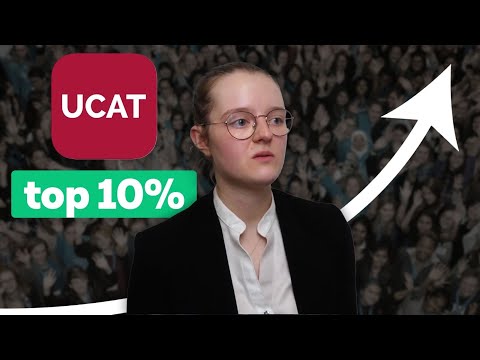
“My first UCAT attempt was without Future Doc. I didn’t have anyone to ask the specific questions I wanted answered. This time around I went from 2,600 and a Band Two to 3,330 and a Band One. It’s a massive improvement.”Magda, Re-Applicant
The Future Doc Guarantee
The Offer Guarantee
If you complete the programme, attend your sessions, and follow the roadmap your coach sets out for you, and you still don't receive an offer from any medical or dental school, we continue working with you into the following application cycle at no extra cost. We re-strategise and pick up right where you left off.
30-Day Money-Back Guarantee
Try the programme with complete confidence. If for any reason you're not happy within the first 30 days, we'll give you a full refund. No questions asked.
— Dr Ash
93% of Future Doc students receive at least one offer to medical or dental school.
Frequently asked questions
What if I don't know why I was rejected?
That's exactly what the Application Diagnostic is for. The forensic audit reviews your previous application against what your target universities were looking for. It examines your UCAT score, personal statement, university choices, and interview performance to identify where the specific failure points are.
Most re-applicants have never had this level of analysis done on their application. The opacity of the process is part of what makes reapplying so difficult. You can't fix what you haven't identified. The diagnostic removes the guesswork and gives your coach a clear picture of what to prioritise.
Should I change my university choices?
University selection is often the single biggest fix for re-applicants. Many students who failed had strong enough applications but applied to the wrong universities for their profile. The University Selection Clinic uses admissions data most applicants never see, including how different universities treat re-applicants, where your specific profile is competitive, and which universities penalise previous rejections.
This isn't just about matching a UCAT score to a cut-off. It's about looking at the student as a whole person: interview format suitability, personal statement orientation, academic profile, and the specific rules each university applies to re-applicants. The Selection Database makes this process precise rather than hopeful.
Will universities hold my previous rejection against me?
Different universities have different rules. Some penalise re-applicants, some don't, and some actively welcome them. The Selection Database knows which. This is one of the reasons university selection is so critical for re-applicants: you can't afford to waste a choice on a university that will hold your previous application against you.
Your coach factors this into the University Selection Clinic from the start. The goal is to build a shortlist of universities where your profile is genuinely competitive and where your re-applicant status is either neutral or an advantage.
Do I need to resit the UCAT?
It depends on the diagnosis. Sometimes the UCAT was fine and the problem was elsewhere. Your coach determines what actually needs to change based on the forensic audit. If your UCAT score was adequate for your target universities and the failure point was somewhere else, resitting could be a waste of energy that would be better directed at the real problem.
If the UCAT does need improving, the UCATalyst Method, our structured approach to UCAT preparation, builds a plan calibrated to your starting point and timeline. But this decision is made strategically, not by default.
What if the guarantee applies and I don't get in?
We continue working with you into the following application cycle at no extra cost. That's the commitment. We don't just want you on the programme. We want you to get in. We back our students all the way, because that's what we're here to do.
Outcomes don't define ability. Some of the best doctors working today struggled to get in. The 7% who don't get an offer in their first year with us are not less capable. The support continues, and it stops people giving up on what they know they're meant to do.
Can I start preparing during my gap year?
Yes. Many re-applicants join during or just before their gap year. The Application Diagnostic builds a timeline around your situation. Starting earlier gives your coach more time to address whatever the forensic audit identifies, and it means every element of your application can be coordinated properly rather than rushed.
The sooner you start, the stronger your application. But the Predictable Offer Protocol adapts to wherever you are in the process. Joining later doesn't mean you can't succeed. It means the plan looks different.
This time, with a diagnosis.
This time, with a system behind you.
93% of our students receive at least one offer. If you don't, you go again for free.
Apply to the ProgrammeWe purposefully limit capacity to ensure quality