
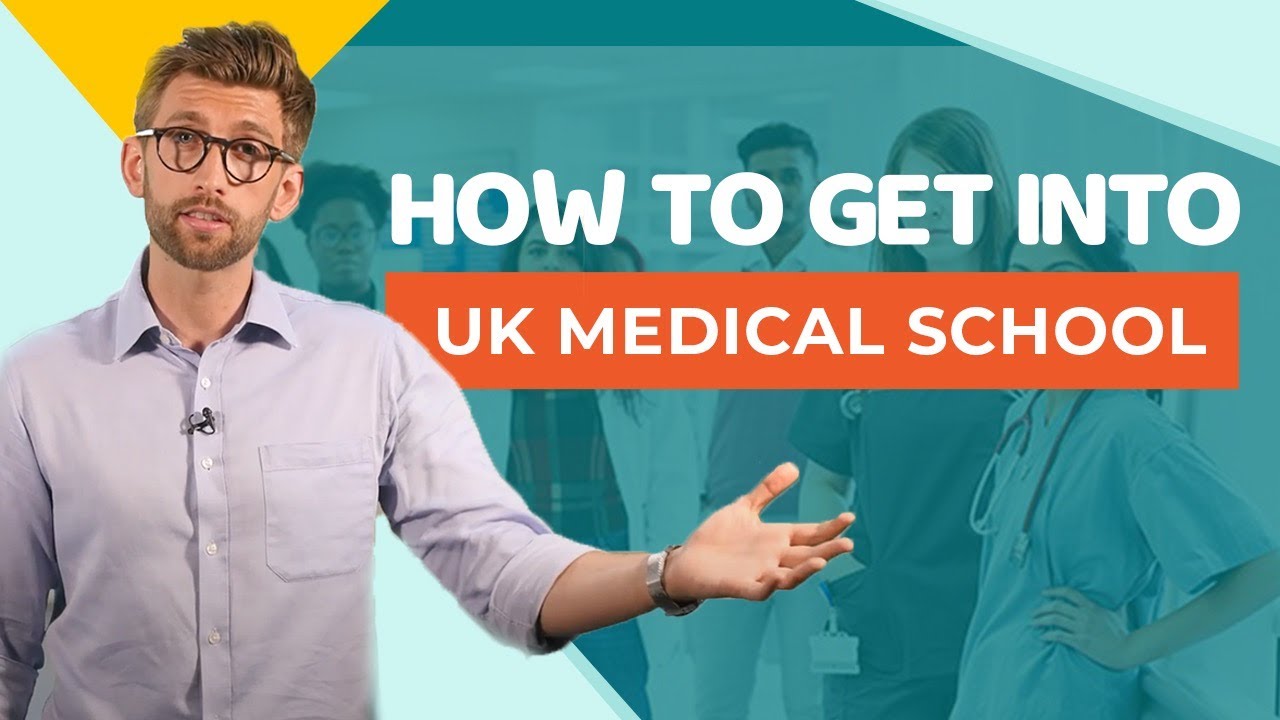
From the Future Doc YouTube channel · Recorded 27 March 2020 · 6 min video
To get into medicine in the UK you need high A level or IB grades, at least a grade six in GCSE maths and English, a strong admissions test score, and usually an English language qualification if you’re from a non-English speaking country. You also need work experience, to be 18 by the time you start, occupational health clearance and a DBS check. Beyond that, every medical school is checking three things: academic ability, communication skills and a real passion for the job.
Key takeaways
- Make your grades your number one priority, because without them nothing else in your application counts.
- Shortlist medical schools before you choose your A levels, then check each university’s website for the subjects and grades it requires.
- If your academic background is complicated or you’re applying from abroad, call the admissions office and confirm you’re eligible.
- Plan for the non-academic checks too: work experience, being 18 by the start of the course, vaccinations and a DBS check.
- Prepare for the interview question ‘what makes a good doctor?’ with your own view, backed by reasons. The four A’s are a good starting point.
- If you have a disability or dyslexia, talk to the medical school early and use the disclosure section on your UCAS application.
What’s changed since these videos
These videos were recorded between March 2020 and April 2022. Most of the advice still stands, but note:
- The BMAT has been discontinued. The last sitting was in 2024, and universities that used it now use the UCAT or their own assessments. Check each university's current entry requirements.
- Application statistics change every cycle. Figures mentioned in this video were correct at the time of recording.
- The grade ranges, IELTS score and subject trends mentioned in these videos reflect the time of recording. Entry requirements differ between universities and change from year to year, so check each university's current requirements before you apply.
- The medical school comparison tool mentioned in the older video was part of an earlier version of the course.
What grades do you need for medicine in the UK?
Let’s start with the thing everyone worries about first. Medicine demands high grades. That isn’t the only thing medical schools look at, but it is the foundation everything else sits on.
When I recorded the first video, I said that A level applicants were looking at a minimum of around AAB for some universities, rising to A*A*A at the higher end, and around 35 to 36 points for the IB. Treat those as a rough picture from that time, not a promise. Grade requirements vary between universities and they shift from year to year, so always check the current figure on each university’s own website.
At GCSE, medical schools want to see at least a grade six in maths and English. That’s their way of checking you have a minimum level of competency in both. Some universities set the bar much higher than that, and I’ve covered which universities require high GCSE grades separately.
If you’re coming from another grading system abroad, contact the universities directly. They will have their own policy for your specific country and the grades they need from you.
Why your grades come before everything else
Here’s the main takeaway, and I say it to every student I work with. Whatever help you get with your application, and all the advice I give on my channel, counts for nothing if you don’t get the grades.
Think about the two outcomes. If you get your grades but don’t get a place, you live to fight another day. You can use those grades to apply again in the next cycle. If you don’t get them, you may have to resit those exams, and universities have specific policies on resits. Some will exclude you. Or you might end up doing a different degree first and coming back through the graduate route, which is far more competitive.
So your primary focus should be making sure you get the required grades. If that means getting a tutor or doing extra work to go the extra mile, do it. There’s absolutely nothing wrong with getting help. Work hard, focus on your studies, and don’t let distractions get in the way of starting a successful career.
Which A levels should you pick for medicine?
It’s not a prerequisite, but it really helps to know which medical schools you’re thinking of applying to before you pick your A levels. Why? Because each university’s website tells you exactly which A levels you need to be eligible to apply there. Pick your subjects without checking and you could rule yourself out of a university you love before you’ve even started.
In the older of the two videos I talk about subject trends shifting over time. That’s exactly why you shouldn’t rely on general rules or what a friend was told a few years ago. Requirements change, so check the current ones for every university on your list.
If you have a complicated academic past or you’re applying from abroad, pick up the phone. Call the admissions office, explain your situation and confirm what you need or if you’re currently eligible. They’re usually very friendly and very helpful.
What else do medical schools look for academically?
Beyond school grades, there are a few more academic boxes to tick.
- An admissions test. Your score in the aptitude test can be a critical part of being invited to interview. In the video I mention the UCAT, the BMAT and the GAMSAT. The BMAT has since been discontinued (more on that below), so for undergraduate medicine you’re now looking at the UCAT, and the GAMSAT for many graduate courses.
- An EPQ. It isn’t essential, but it might help, especially if you’re applying to the more academically heavy universities such as Oxbridge or some of the London universities.
- A degree, if you’re a graduate. For graduate entry medicine, universities may still want to see your GCSEs, but sometimes they’re happy to accept a 2:1 degree instead. My graduate entry medicine tips go into that route in more detail.
What English language requirements are there for international applicants?
Medical schools teach in English, and they use complex language to describe diseases. By the time you apply, your spoken and written English needs to be of a high standard.
If you’re applying from a non-English speaking country, universities will usually want you to sit an English language test such as the IELTS. In the first video I quote a score of 7.5 or above. Check the exact score each of your universities asks for, as it can differ.
One detail catches people out. That score usually needs to be achieved by the time you start the course, not the day you apply. You apply roughly a year before you start, so you have that extra time to get it done.
When you know which universities you’re applying to, it can be worth getting your English qualification through one of them. Some universities run their own courses that issue certificates, and that can make the whole process much easier. If you’re applying from overseas, I’ve also written about how to increase your chances as an international applicant.
What are the non-academic requirements for medical school?
On the non-academic side, there are four things medical schools want to see.
- Work experience. They want proof that you’ve had exposure to the profession. There’s a lot to untangle here, so read my guide on why you need work experience.
- A minimum age. You usually have to be 18 by the time you start medical school.
- Occupational health clearance. You need to show you’ve had certain vaccines.
- A criminal record check. You’ll need to pass police checks, which are done through the Disclosure and Barring Service (DBS).
What if you have a disability or dyslexia?
Universities have to be sure the doctors they produce are fit to practise. If you have a disability that you think might affect your ability to be a doctor, check with the medical school. They’re usually very supportive. They can cater for students with visual, hearing, physical or specific learning disabilities such as dyslexia. I’m dyslexic myself, and my medical school was very supportive throughout. There’s a dedicated place on your UCAS application where you can disclose any disability.
The three things every medical school is really checking
The medical school application is generic. It’s systematised to be as fair as possible. UCAS applications are reviewed by multiple people, and interview panels work under strict guidance about what they can and can’t give marks for. The flip side is that it turns into a game. You have to learn to play it well, tick all the boxes and jump through all the hoops.
But when you break the whole thing down, they’re checking you have three things:
- Academic ability. Everything we’ve covered above.
- Communication skills. You have the traits needed to be a doctor, or at least the seedlings of them that can grow into those skills.
- Passion for the job. You understand the career, you know what it’s really about, and you still want it. This is a career that will last your entire lifetime, so they want to see real dedication.
Universities look at far more than grades. If they didn’t, they would simply pick the highest scorers. Being a doctor needs academic ability plus several other important skills, and the rest of your application is where you show them.
What makes a good doctor? The four A's
You may well be asked this directly at interview, so it helps to have thought about it. The best explanation I’ve come across, and one I agree with, comes from Dr Peter Attia, who hosts a podcast called The Drive. He says a good doctor comes down to the four A’s.
- Ability. By far the most important. You need the knowledge and skills to help your patient, and that comes before anything else.
- Affability. This isn’t about patients liking you. It’s about getting them on board with your treatment. If a patient doesn’t trust you, they won’t follow the treatment you recommend, and you won’t be an effective doctor.
- Advocacy. How well do you know the system? Do you know the right person to refer to, and how to get your patient where they need to be in the most efficient, direct way?
- Accessibility. In the American system, patients sometimes have a doctor’s number or direct access to their secretary. That’s less the case in the NHS, but you can still apply it here: how responsive you are when you’re called or emailed, and how proactive you are at making things happen.
That’s just one way to answer the question. It’s perfectly fine to have your own opinion. Just be ready for an intelligent discussion and have reasons to back up what you say.
The trait I’d put above the rest
If I had to pick one trait, it’s getting things done. Resourcefulness. Successful applicants take the initiative, whether that’s finding out information or chasing work experience. Don’t be afraid to call a university with a question. The admissions staff are the best people to ask, they’re often very helpful, and they usually reply quite quickly. Most of the time the generic questions you ask them apply to every medical school you’re applying to. And that same proactiveness should go into your exams too.
Frequently asked questions
What is the minimum GCSE requirement for medicine?
Medical schools want to see at least a grade six in maths and English at GCSE, to show a minimum level of competency. Some universities ask for more than that, so check each one you’re considering.
Do I need an EPQ to get into medicine?
No, it isn’t a requirement. It might help, though, especially if you’re applying to the more academically heavy universities such as Oxbridge or some of the London universities.
What age do you have to be to start medical school in the UK?
You usually have to be 18 by the time you start medical school. The requirement is about your age at the start of the course, not when you apply.
Can I study medicine if I have dyslexia?
Yes. Medical schools are usually very supportive and can cater for specific learning disabilities such as dyslexia, as well as visual, hearing and physical disabilities. I’m dyslexic myself and my medical school supported me throughout. Check with each medical school and disclose it in the dedicated section of your UCAS application.
Who should I ask if I'm not sure I meet the entry requirements?
Call the medical school’s admissions office. The staff are usually friendly, helpful and quick to reply, and they can confirm if you’re eligible given your situation.
Want help with your application?
The Predictable Offer Protocol is Future Doc’s complete programme for medicine and dentistry applicants, with one coach coordinating every part of your application.
Video transcripts
Transcript from “What You Need To Get Into UK Medical School” (10 April 2022)
in this video i'm going to take the entire medical school application process and boil it down into three core principles that if you can truly understand these internalize them and implement them it will make your application the strongest it can possibly be one of the main concerns of potential medical students when they're applying is that of grades now of course it demands high grades but that is not the only thing if you're doing a levels you probably need to be looking at minimum aab for some universities whereas on the higher end it might even be as high as a star a star a if you're sitting the ib you're kind of looking at a 36
35 to get in then if you come from another grading system internationally it's worth contacting the universities because they will have their own policy about that specific country and the grades they require basically the main takeaway is that whatever we do here to help you get into medical school and all the advice that i give on my channel if you don't get the grades then it all counts for nothing so your primary focus really should be making sure that you get the required grades because if you do and you don't get a place at medical school well at least you live to fight another day with that and you can use those grades to apply
at the next cycle if you don't you may have to reset those exams again and universities have specific policies for that some of which you might be excluded from or you might have to go through a different degree and then go by the graduate route which is way more competitive 34 applicants to one place if you want to learn a little bit more about graduate applications and how i can change those odds and make them in your favor you might want to check out this video here otherwise the best way is to kind of make sure that you kind of have everything sorted so you're taking care of each thing as it comes along i
compartmentalized the university application into four phases i actually described those four phases in this video here which i'd recommend you watch to kind of help you prepare and plan your year ahead when you're applying to medical school it's certainly not a prerequisite but it does help if you do know which medical schools you're thinking of applying to prior to picking your a-levels that's because you can go on their website and they will tell you specifically what a-levels they require to be eligible to apply to that university and especially if you have a complicated academic past or you're applying from abroad it can help just to call them directly and have a chat with them about
your situation and confirm what you need or whether you are currently eligible and they're usually very friendly and very helpful with all that stuff however it's important to realize that universities look at more than just grades when picking prospective medical students because otherwise they would just literally pick the highest scorers being a doctor requires academic as well as several other important skills so i'll outline now some of the academic and non-academic skills that they look for when picking students academically they want to see good school grades as we talked about earlier with the a levels ib also with gcse they want to see at least a six in maths and english just to make sure
that you've got a minimum amount of competency when you apply to gem they might still want those but sometimes if you've got 2-1 degree they're happy to kind of take that if you want to learn more i've got a dedicated playlist just for gem applicants here after that they want to see good scores in the aptitude test so the ucat bmat or the gamsat can be a critical part of you being invited to interview i won't talk about this much here because on this channel i do a load of teaching on all of those tests one of which you might want to check out here which is my ucat playlist after that pursuits like an
epq might help especially if you're applying to the more academic heavy universities such as oxbridge or maybe some of the london universities and finally if you're applying from a non-english speaking country they will want you to sit one of the ielts which is a competency test of english and they want to see a score of 7.5 or above to be eligible to apply to uk medical school that score of 7.5 they want to see achieve by the time you start the course so if you're applying in september 22 for example you don't start until september 2023 so that will be the requirement that you have that completed by that september 2023 start on the non-academic
side they want to see a few things the first is that you have work experience so exposure to the profession now there's a lot to untangle when it comes to work experience so i discussed that in detail in this video here after that they have a minimum age requirement so you have to be 18 at the time of starting medical school usually then they want to see a minimum amount of occupational health clearance which means that you have certain vaccines that you can prove that you've had those and then finally they want to check your criminal record and make sure that you pass the police checks which is done by the disclosure and barring service
system ultimately the process is generic which means that it's systematized to try and be as fair as possible but that means that it basically turns into a game and that's the key thing that i teach my students on my program is that you have to just try and learn to play the game play as well as you can tick all the boxes and jump through all those hoops and that will land you in the best position to be offered a place if you want some one-on-one teaching you can check out the program here where i kind of tell you exactly how we can help you and how we've had such an amazing success rate with
getting students in but as i say they try and make it as fair as possible ucas applications are reviewed by multiple people interview panels are under strict guidance as to what they can and can't give marks for but ultimately the entire medical school application when you break it down boils down to them checking that you have three things the first is the academic abilities that we talked about earlier the second is communication skills that you can communicate or that you have the traits required to be a doctor or at least the seedlings that can develop into the potential of having those skills that make a good doctor and then finally they want to see that
you have the passion for the job they want to see that you understand the career you know what it's about and you still want to go with it and you're very dedicated to a career that's going to basically last you an entire lifetime so one thing that it helps to understand that you may get asked about directly when your interview is what actually makes a good doctor now the best explanation that i've come across and one that i particularly agree with is that of dr peter attears he's a guy who does functional medicine and has an amazing podcast called the drive which i highly recommend that you listen to and he says that a good
doctor boils down to the four a's the first one he talks about is ability and this is by far the most important which i definitely agree with you need to have the knowledge and the ability and the skills to be able to help your patient and that comes first and foremost before anything else second is affability now that's not just about getting patients to like you but it's actually getting them on board with your treatment if you can't get the patient to trust you then they won't carry out the treatment that you recommend and that's as good as useless which means that you won't be able to affect them and therefore won't be an effective
doctor the third one he mentions is advocacy that's basically how well you know the system and can work it to get a patient in a given scenario to where they need to be in the most efficient and direct manner possible the final one he talks about is accessibility which is more for the american health care system where you kind of do have doctors numbers directly if you're a patient sometimes or access to the secretary who's very got very direct access to you this is less so in the nhs but still in the uk you can still use that analogy of accessibility by how responsive are you to when you get called to emails to kind
of just making things happen some people are a lot more proactive than others and i kind of put that ability to get things done under accessibility however that is just one way of answering that question it's perfectly fine to have your own opinion about that just be ready to have an intelligent discussion about it and have some reasons for backing why you say the things that you do so that boils down the essence of really what you need to do to build a strong medical school application but the most important trait i would say is that of kind of getting stuff done that proactiveness that's going to extend into your a levels or whatever exams
you're taking you really need to do whatever you can to make sure that you get those grades so whether that means getting a tutor or just doing extra work just to make sure you go that extra mile there's absolutely nothing wrong with getting help and i find that getting a tutor or someone to guide you is really what makes the difference that's definitely what i found with our academy program where we help students directly one-on-one and we can see that there are little errors that they're making or blind spots they've got or just things that they didn't know that make the whole process so much easier and just by us helping them one-on-one we take
that kind of what is whether sometimes it's eight percent success rate 25 in some years and depending on the university and we've turned that into a 90 success rate for all of our students who've come on the academy so if you want to check out how you can get one-on-one help you might want to check out this video here which is going to tell you in depth kind of how we help our students achieve the level of success that we do so thanks for watching this video and i'll see you over in one of those
Transcript from “What You Need To Get Into UK Med School | Entry Requirements For International & UK Applicants” (27 March 2020)
Hello and welcome back to the channel. I'm Dr. Ash Hilton, a UK medical school admissions tutor. And what I'm about to show you is one of the videos from my online course for how you can get into your top choice medical school. For any of the PDFs or resources that we talk about, just head to futuredoc.co.
And if you want to see some regular videos, I'll be posting weekly videos on here on my YouTube channel. So make sure you subscribe in the bottom corner. And that said, enjoy. Hello and welcome back. How did you enjoy the last lesson?
Do you feel like you have a good understanding of the application process by now? If not, don't worry. We'll take you through each step at a time so that when you come back through and go through the course again, it will be really easy. Now we're going to look at what requirements you need for the university to be able to consider your application. One of the main concerns of potential medical students is their academic grade requirements.
My advice to you is work hard to earn the very best grades you can. Focus on your studies and don't allow any distractions to get in the way of starting a successful career. Trends with subjects are starting to favor the more communication heavy subjects. Therefore, subjects such as psychology are becoming a lot more in favor, whilst chemistry are becoming less and less of a requirement. It helps to know which medical school you would like to apply for.
Then you can pick subjects that they prefer. The best way to check these is either by calling the university admissions office yourself or by checking their websites. However, when becoming a doctor, grades are not the only important factor. Otherwise, they would just simply pick the highest people who perform well in exams. Becoming a doctor requires academic as well as many other important skills.
To help you determine if you meet the general grade and additional requirements for medical school, I've created a medical school comparison tool that allows you to look at the various differences between medical schools, including their requirements. More on this later. Medical schools are taught in English and use complex languages to describe diseases. It is imperative that by the time you apply to medical school that your spoken and written English is of a high standard. The universities will often demand that you have an English language qualification held at advanced level.
Luckily, the universities themselves provide courses that issue you with certificates. When you know what universities you want to apply to, it is worth gaining your English qualification from this university as it will make the entire process much, much easier. The process of applying is generic and fair. You just have to learn how to play the game. UCAS applications are reviewed by multiple people.
Interview panels earn district guidelines. Overall, they're looking at three things. People have to have the academic ability, they have to be able to communicate well, and show that they have a passion for medicine. So, what makes a good doctor? In my eyes, and something to remember throughout your medical career when you are either looking for a doctor or admiring a doctor that you want to aspire to, you should consider the four following characteristics.
Number one, ability. This is the most important. You have to have the knowledge and the skills to be able to treat patients. The second is affability. This isn't just about liking the doctor.
The doctor has to have the patient on side so that they can convince them to comply with any treatment that they recommend. The third is advocacy. Do they know the best person to refer you to or how to work the system most efficiently to treat their patients well? And finally, accessibility. How easily can you reach them or their secretary if anything goes wrong with your medical care?
Bear in mind, this is just my opinion on how I view it. It's okay to have an opinion during your interviews. Just be willing to have an intelligent discussion with them and offer some good reasons as to why you think like that. One of the skills you need to develop as a doctor is resourcefulness. One of the main traits of successful applicants is the willingness to take initiative when trying to find out something or pursue things like work experience.
If you have any questions, be proactive about it. It's also important to develop the bravery and confidence to speak with people. Don't be afraid to call a university to ask them if you have any questions. The best people to ask are the medical school's admission staff. They are often very helpful and actually reply quite quickly.
Most of the time, you can ask them generic questions that actually apply to all the medical schools that you're applying to. A quick note on disability and special requirements. Universities have to determine that the doctors that they produce are fit to practice. If you have any disability that may hinder your ability to be a doctor, check with the medical school. Usually, they are very supportive.
For example, they are able to cater for any students with visual, hearing, physical or specific learning disabilities such as dyslexia. I myself am dyslexic, for example, and they were very supportive throughout. There is a special place on your UCAS application where you can disclose any disability. Your grades will potentially influence the medical school that you choose, so the biggest takeaway is to do your best to get the necessary grades to get into the medical school of your choice. Later in this module, I'll introduce you to our amazing system on how to select the best medical school for you.
In the next lesson, we'll dive a little deeper into more of the attributes candidates must show to successfully apply to medical school, so stay tuned! I hope you enjoyed that video and found it really useful with loads of actionable tips that you can use to get into your top choice medical school. I'll be posting weekly videos, so make sure you subscribe in the bottom corner. And if there's anything that you want to see from the video, like resources or PDFs, just head to future.doc.co and you can find everything there. Thanks a lot and take care!
